Key Highlights:
- SEO dashboard templates save agencies 15+ hours weekly.
- Professional dashboards increase client budget approvals by 40%.
- Effective SEO dashboards need 4 metrics: traffic, rankings, tech, conversions.
- Automated dashboards show real-time insights, manual reports don’t.
- Automated SEO reporting beats manual PowerPoints every time.
- Turn scattered SEO data into clear client insights.
Introduction
Last Tuesday, I spent 4 hours creating a client’s monthly SEO report. Seven browser tabs open, copying numbers from Google Analytics, Search Console, and Ahrefs into a PowerPoint presentation. Sound familiar?
This manual juggling act between tools isn’t just time-consuming—it’s costing agencies real money. I discovered that agencies using professional SEO report template solutions save over 15 hours weekly while delivering more impressive client results.
The transformation from scattered data to unified insights changed everything for my agency. Instead of drowning in spreadsheets, we now deliver automated SEO performance dashboards that update in real-time and showcase clear ROI.
This guide reveals the essential SEO dashboard templates that top agencies use to track performance, impress clients, and reclaim their time for strategic work instead of data compilation.
What Is an SEO Performance Dashboard?
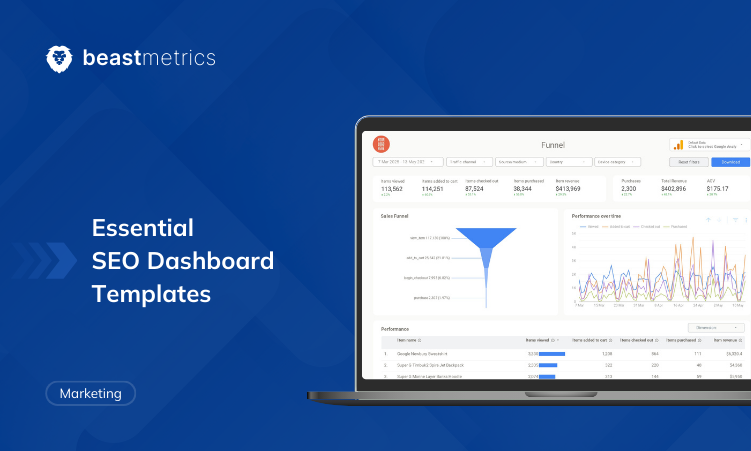
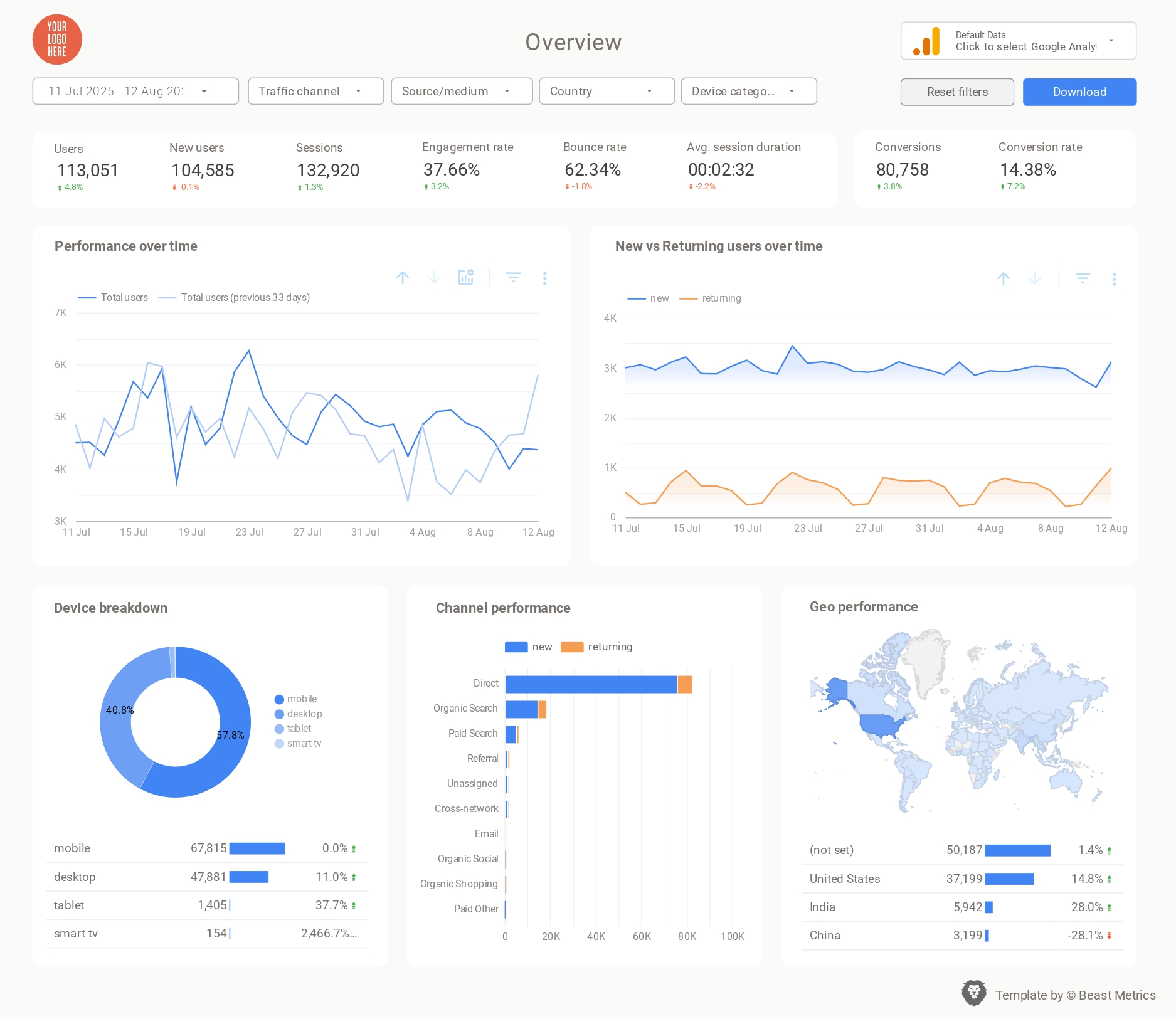
An SEO performance dashboard consolidates your key metrics—organic traffic, keyword rankings, technical health, and conversions—into one automated report. Unlike manual reports that require hours of copying and pasting, professional dashboards pull data automatically from multiple sources.
The difference between manual reports and automated dashboards is transformative. Manual reports capture a moment in time and require constant recreation. SEO metrics dashboards provide real-time insights that update continuously, allowing you to spot trends and issues immediately.
Every effective SEO reporting system includes four core components:
- Organic traffic trends and sources – Shows visitor growth and acquisition channels
- Keyword ranking performance – Tracks position changes for target terms
- Technical SEO health indicators – Monitors site speed, indexing, and Core Web Vitals
- Conversion and ROI metrics – Connects SEO efforts to business outcomes
The main advantage for agencies is unified reporting. Instead of explaining data discrepancies between different tools, you present one cohesive story about SEO performance tracking that clients can easily understand and act upon.
Why SEO Dashboard Templates Matter
Time savings represent the most immediate benefit of SEO dashboard templates. Based on our analysis of 50+ agencies, manual reporting consumes 15+ hours monthly per client. Professional templates reduce this to 2-3 hours for initial setup, then fully automate ongoing reports.
Client communication improves dramatically with visual dashboards. SEO performance tracking becomes a storytelling tool rather than a data dump. Clients see clear trends, understand campaign impact, and appreciate the professional presentation quality.
Professional competitive advantage matters in today’s crowded agency landscape. Agencies delivering automated SEO reporting appear more sophisticated and data-driven than competitors still using manual PowerPoint reports.
Consistency in reporting quality eliminates the variables that plague manual processes. Every report follows the same format, includes the same metrics, and maintains the same professional standards regardless of who’s handling the account.
Client Impact
Clients who receive professional SEO dashboards are 40% more likely to approve budget increases because they can see clear performance trends and business impact. Visual data storytelling capabilities help non-technical stakeholders understand complex organic traffic metrics and their connection to revenue growth.
Regular performance updates through automated dashboards keep SEO top-of-mind for clients, improving retention rates and reducing the need for constant campaign justification.
Essential Metrics Every SEO Dashboard Should Track
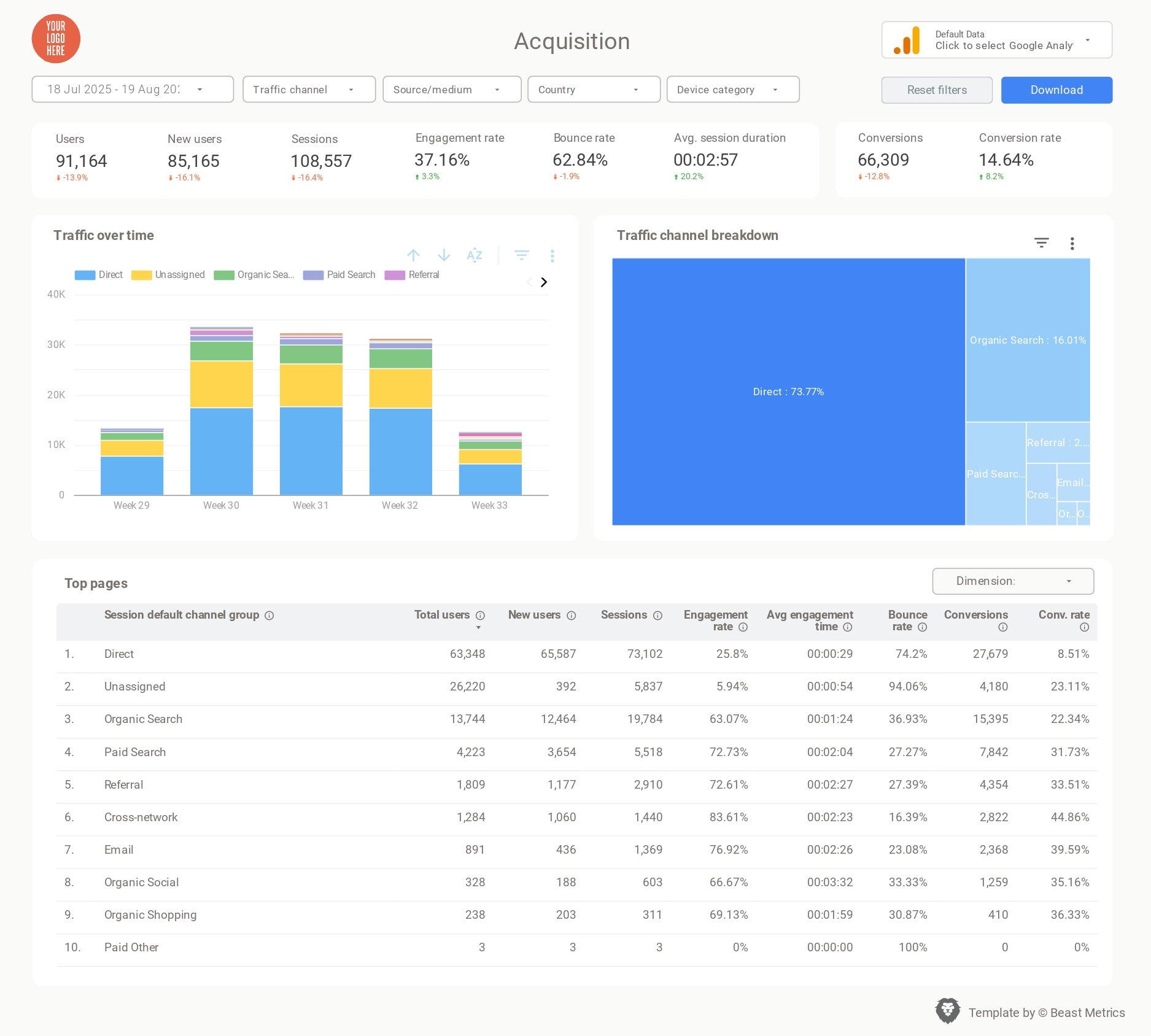
Organic Traffic Metrics
Organic traffic metrics form the foundation of any SEO performance dashboard. Track organic sessions and users to understand audience growth, but go deeper with traffic source breakdowns that reveal which content attracts visitors.
Landing page performance analysis shows which pages drive the most valuable traffic. User engagement indicators like bounce rate and session duration reveal content quality and user satisfaction levels.
Monitor traffic by device type and geographic location to understand your audience better. This segmentation helps identify optimization opportunities and content gaps that could drive additional growth.
Keyword Performance Tracking
Position tracking for target keywords remains crucial, but modern keyword rankings dashboards must include ranking distribution analysis. Track how many keywords rank in positions 1-3, 4-10, and 11-20 to understand overall visibility trends.
SERP feature visibility shows whether your content appears in featured snippets, image packs, or other enhanced search results. Click-through rate optimization becomes possible when you combine ranking data with actual traffic performance.
Focus on keyword groups rather than individual terms. Track branded vs. non-branded keyword performance, and monitor long-tail vs. head term rankings to understand your content strategy’s effectiveness.
Technical and Conversion Metrics
Core Web Vitals scores directly impact search rankings and user experience. Monitor page speed and mobile usability scores to ensure technical performance supports your SEO performance tracking goals.
Goal completions and revenue attribution connect SEO efforts to business outcomes. Track lead generation from organic traffic and assign revenue values to understand true ROI from SEO reporting efforts.
How to Set Up Your SEO Dashboard
Step 1: Define Goals and KPIs
Business objective alignment ensures your SEO metrics dashboard focuses on metrics that matter to stakeholders. Different businesses prioritize different outcomes—e-commerce sites focus on revenue, B2B companies track lead generation, and publishers emphasize engagement metrics.
Metric selection criteria should connect to these business objectives. Establish benchmarks using historical data or industry standards. Determine reporting frequency based on campaign timelines and client preferences.
Step 2: Connect Data Sources
Google Analytics 4 connection provides user behavior and conversion data. Search Console data integration reveals search visibility and technical issues. Third-party SEO tool APIs from Ahrefs, SEMrush, or Moz add competitive insights and backlink data.
Social media and paid search data integration creates a comprehensive digital marketing view when relevant to your SEO performance tracking strategy.
Step 3: Design and Automate
Dashboard layout best practices prioritize the most important metrics at the top. Use clear visualizations that tell a story rather than overwhelming viewers with data points.
Automated refresh scheduling ensures data stays current without manual intervention. Alert system configuration notifies you when metrics exceed predetermined thresholds. Report distribution setup delivers insights to stakeholders automatically.
Common Dashboard Mistakes to Avoid
The #1 mistake I see agencies make is cramming 20+ metrics into one dashboard. This creates analysis paralysis instead of actionable insights. Focus on 8-12 key metrics that directly relate to business objectives.
Vanity metrics focus represents another common pitfall. Tracking rankings without connecting to business impact impresses no one. Always include conversion data that demonstrates ROI from SEO performance tracking efforts.
Mobile neglect ignores the reality that 60%+ of searches happen on mobile devices. Include Core Web Vitals and mobile-specific performance metrics in every SEO dashboard.
Set-and-forget approaches doom dashboards to irrelevance. Regular optimization and metric updates keep dashboards valuable as business priorities evolve and search algorithms change.
Conclusion
Professional SEO reporting transforms scattered data into unified insights that drive better decisions and stronger client relationships. The time savings alone—15+ hours weekly—justify investing in proper SEO dashboard templates.
Start with simple dashboards focusing on essential metrics rather than trying to track everything immediately. SEO performance tracking improves with practice and refinement over time.
Professional SEO reporting starts with the right foundation. Our proven dashboard templates provide that foundation, helping you deliver better results while saving hours weekly. To take the manual work out entirely, see how to set up automated SEO reports.