Introduction
Six months ago, I helped a client create advanced SEO reporting templates targeting high-volume keywords. We achieved first-page rankings for 15 of them. But conversions barely moved despite driving massive traffic.
The traffic was there, but visitors bounced quickly. That’s when I realized our keyword reports were missing something. The most critical element: search intent analysis.
Search intent analysis reveals why users search for specific terms. It transforms basic keyword tracking into strategic insights. Your Looker Studio SEO dashboard becomes a powerful decision-making tool.
This guide shows you how to integrate search intent identification into dashboards. You’ll build reports that guide content strategy effectively. Transform your SEO reporting from data collection to strategic intelligence.
Understanding Search Intent Analysis for SEO Dashboards
Search intent analysis categorizes user queries by their underlying purpose. Modern SEO strategy revolves around satisfying this intent accurately. Recent developments in Looker Studio 2025 have made intent-based analysis more accessible than ever.
Understanding intent helps align your content with user expectations. When content matches search intent, Google recognizes this alignment and provides significant ranking boosts. Traditional keyword reports miss these critical intent signals completely.
Search intent identification transforms how you approach SEO strategy. Instead of chasing volume, you target user needs. This approach leads to higher conversion rates consistently.
The Four Types of Search Intent
Informational intent covers users seeking knowledge, tutorials, or guidance. Queries like “how to,” “what is,” signal early-stage research. These searches represent awareness stage funnel traffic.
Navigational intent targets specific websites or branded searches. Users already know their destination and seek direct access. These queries often dominate branded traffic in SEO dashboards.
Commercial intent indicates product research and comparison behavior. Terms like “best,” “vs,” “reviews” signal consideration stage. Google categorizes these as pre-transactional searches.
Transactional intent represents purchase-ready users seeking immediate action. Keywords include “buy,” “price,” “coupon” and conversion-focused terms. These drive the highest value traffic consistently.
Why Search Intent Analysis Transforms SEO Strategy
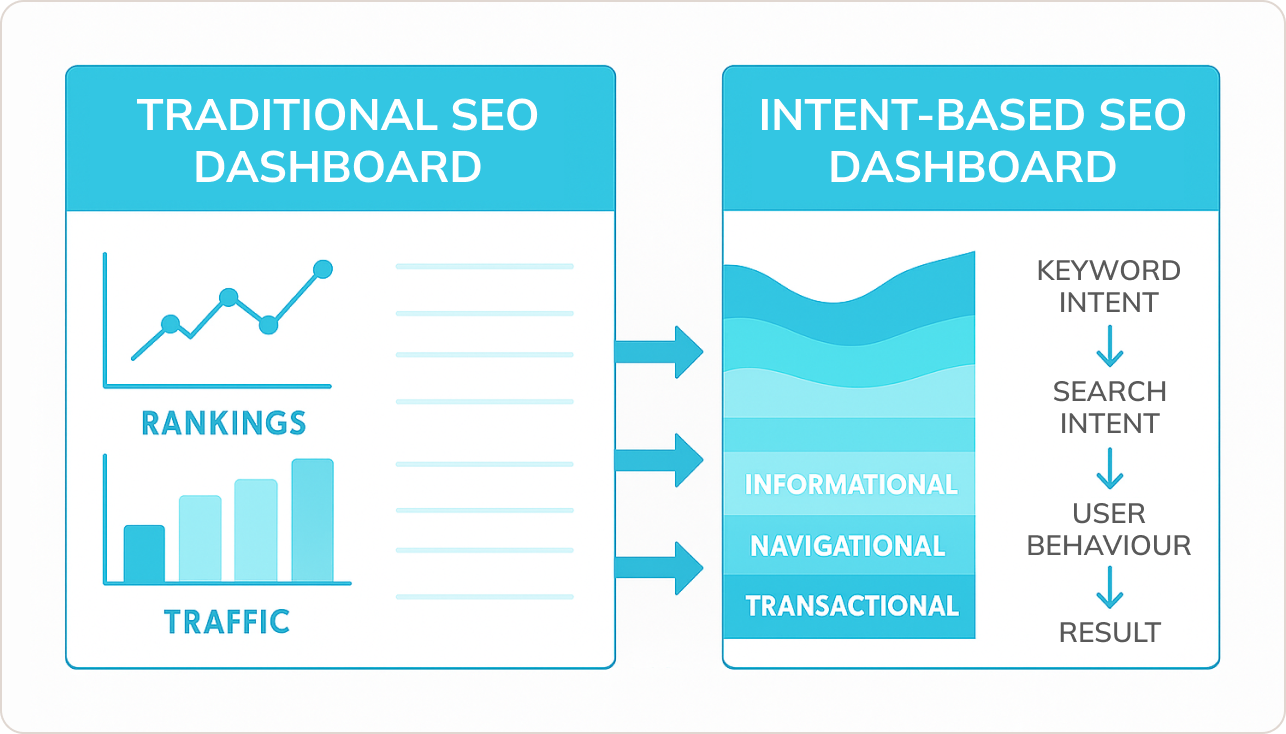
Agencies using search intent analysis in their dashboards report 35% higher client retention. They demonstrate clear connections between search behavior and results. Search intent analysis elevates reporting from basic metrics.
Traditional dashboards track rankings and traffic in isolation. Intent-based analysis reveals why people search and behave. This understanding drives more effective content strategy decisions.
Content Strategy Benefits
Search intent analysis identifies content gaps across intent categories. You might discover strong informational content but weak transactional. This insight guides content creation priorities effectively.
Intent alignment improves user experience and engagement metrics significantly. When content matches query intent, users stay longer and convert better. Bounce rates decrease while satisfaction scores increase.
Performance tracking becomes more granular with intent segmentation. Compare CTR across informational versus transactional queries strategically. This reveals insights like ranking well for branded terms but struggling with commercial keywords.
Dashboard Visualization Benefits
Intent distribution shows your keyword portfolio’s strategic balance. User journey mapping connects awareness to conversion stages. Content performance tracking identifies top-performing intent categories effectively.
ROI tracking for intent-optimized content demonstrates clear business value. Looker Studio SEO dashboard visualizations make these insights accessible. Stakeholders understand strategy impact without technical complexity.
Essential Components of Intent-Based Keyword Reports
Search Intent Classification System
Automated intent detection uses keyword patterns and semantic analysis. Create custom dimensions to separate branded versus non-branded terms and classify keywords by search intent. This systematic approach scales across large datasets.
Manual classification handles high-value terms requiring nuanced interpretation. Intent scoring provides confidence levels for each classification. Regular reviews and updates maintain accuracy over time.
Search intent identification relies on trigger words and patterns. Commercial terms include “best,” “compare,” “versus” consistently. Transactional keywords feature “buy,” “price,” “coupon” prominently.
User Journey Mapping Through Intent
Awareness stage connects with informational intent keywords and education. Consideration stage aligns with commercial investigation and comparison queries. Decision stage focuses on transactional intent terms and conversion.
Retention stage emphasizes navigational brand searches and support. Each stage requires different content types and optimization. Intent mapping reveals gaps in your content funnel.
Performance Metrics by Intent Category
Traffic volume and quality metrics segment by intent type. Engagement rates reveal which intent categories perform best. Conversion rates differ significantly across intent types consistently.
Content effectiveness scores help prioritize optimization efforts strategically. Keyword reports become actionable intelligence rather than data. Intent-based metrics guide resource allocation decisions effectively.
Step-by-Step: Building Search Intent Analysis in Looker Studio
Step 1: Prepare Your Intent Data Sources
Export keyword data from SEO tools like Google Search Console, SEMrush or Ahrefs. Set up intent classification spreadsheets with systematic categorization rules. Clean and standardize data for consistency across platforms.
Intent confidence scoring helps validate classification accuracy over time. Machine learning approaches achieve 85% accuracy for English datasets. Manual validation improves automated classification results significantly.
Step 2: Create Intent-Based Data Connections
Use Google Sheets connections for intent classifications alongside Search Console data blending. Google Analytics behavior data provides engagement context. Third-party SEO tool APIs enhance dataset completeness.
Looker Studio SEO dashboard integration connects multiple data sources. Real-time data updates ensure dashboard accuracy consistently. Search intent analysis becomes dynamic rather than static.
Step 3: Design Intent Analysis Visualizations
Intent distribution pie charts show portfolio balance across categories. User journey flow diagrams map conversion paths effectively. Performance comparison tables highlight optimization opportunities clearly.
Conversion funnel analysis connects intent to business outcomes. Looker Studio’s 2025 responsive layouts work across mobile and desktop devices. Dashboard accessibility improves stakeholder engagement significantly.
Advanced Search Intent Tracking Techniques
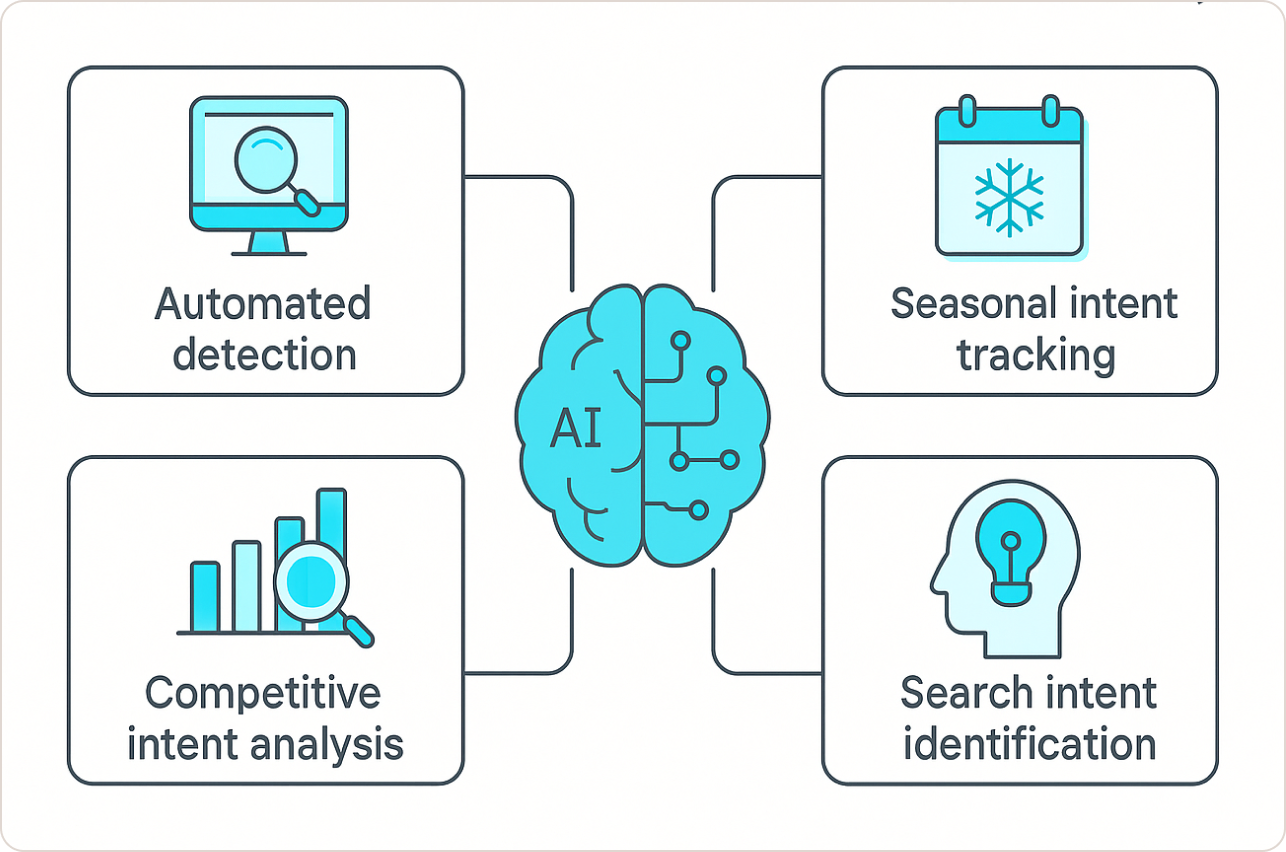
Advanced tools now use machine learning and LLM models to classify search intent accurately at scale. Automated detection analyzes keyword patterns and SERP features. Intent confidence scoring provides reliability metrics for classification.
Seasonal intent tracking reveals how search behavior changes. Commercial intent might spike during holiday shopping periods. Informational searches increase when new trends emerge.
Competitive intent analysis shows how competitors target different intents. Use tools like Semrush to see which content formats perform best for specific queries. This insight guides content strategy development effectively.
Search intent identification becomes predictive rather than reactive. Machine learning models identify intent shifts before competitors. Looker Studio SEO dashboard automation enables real-time optimization.
Conclusion
Search intent analysis transforms basic keyword tracking into strategic intelligence. By classifying keywords by intent, you gain deeper understanding. Your organic search presence becomes more effective consistently.
Implementation starts with basic intent classification and scales. Search intent identification guides content creation and optimization decisions. Looker Studio SEO dashboard visualization makes insights accessible.
Transform your keyword strategy with intent data today. You’ll drive the right traffic with aligned content. Better results follow when strategy matches user needs.
Ready to revolutionize your SEO reporting with search intent analysis? Get our advanced SEO reporting templates and start building intent-based dashboards that drive real results.
Frequently asked questions
You cannot find your question? Feel free to contact us